
Day 89 out of 120. We are getting weary of sitting around waiting for our next great adventure. OUr feet are becoming itchy as we pound the floor in anticipation like two prize fighting bulls waiting to gore an unsuspecting matador. Quite apt given our next trip will take us to the Iberian Peninsular. Suzy has been partly washed and polished . This always proves a job of great enormity, Unlike a car it takes forever . ARmed with a bucket full of soap suds and a cloth it is a fairly quick job to wash the dirt and cobwebs off a car. It takes a little longer to polish it but compare that with a motorhome and you are talking a job that takes at least four days. One to wash the front and one side, a second to wash the other side and the back and then two days to wash the roof which inevitably requires a steady hand and a good ladder. A few good dry days don't go amiss. It is a soul destroying job as the dirt off the roof accumulates under the satellite dish and under the solar panel which leaves streaks all over the clean paintwork. No wonder it does not get done as often as it should. So Suzy is half cleaned and the rest might be done this week.
Our itchy feet needed scratching so leaving Suzy at home, we picked up Sion and set off in the car for the castle of Kirby Muxloe near to Leicester. Never heard of it . Well neither had we until we visited Roche Abbey last week and I picked up a leaflet which extolled its virtues. The castle is just one hour away from home. The journey down the M1 horrendous despite it being Sunday. Cars, vans, tuggers and lorries everywhere and of course endless lines of roadworks which restricted us to 50 mph. The itchy feet were itching to get the pedals down and hit the empty roads which we don't have in this country.
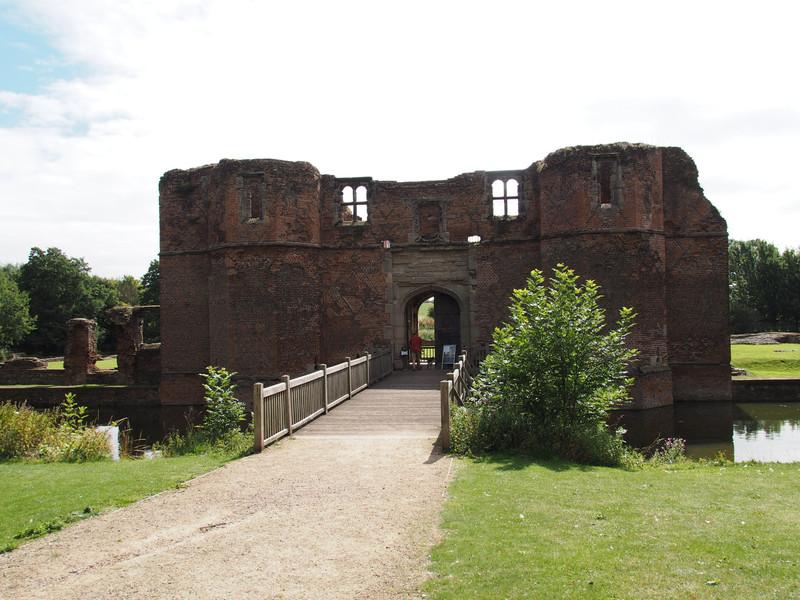
Arriving at Kirby Muxlow our lovely Sally Sat Nav took us past the signs for the castle and round the houses before depositing us back again in the place we had passed five minutes before . What's that all about? The car park looked empty until we saw ....................... a bus . We hadn't expected that. The small castle was heaving with locals on a day out which resembled an old age pensioners outing. They didn't stay long, walked around and then got back on the bus to be taken somewhere else. Peace descended and there were just a handful of visitors to the castle. We love it just like that , us, Sion , a few ducks, a flock of Canadian Geese and a handful of other visitors. It gave us chance to stand and watch the lone artist painting the castle from her vantage point in a nearby field. We sat on a seat watching the many anglers fishing in the moat around the castle. A moat covered in pretty white water lilies and populated by the mallards and canadian geese.
We had never heard of the castle but it apparently is an unfinished 15th century fortified manor house which was begun in 1480 by William Hastings the 1st baron Hastings . Never heard of him but during the Wars of the Roses he already owned a manor house on this site . The information boards told us that some of the original manor house foundations are visible as ruins within the enclosure of the new castle. Work was stopped when the poor man was accused by Richard III of treason and executed in 1483 . Yet another case of being in the wrong place at the wrong time and backing the wrong horse. The castle normally would have been bought by someone else or given to someone who backed the King but in this case it was never completed. Some of the completed parts of the towers were occupied by the remaining Hastings family members.
However most of the castle was left in a state of ruin and what a romantic brick built edifice it is. Brick was a new fashionable material at that time. Most castles and houses were built of the local stone but this castle is of the newer material of brick . It looked a lavish construction was in part afforded by the immense power and wealth that William had gained in the service of King Edward IV. The bricks are a fantastic red and were formed and fired on site or at worse nearby as was usual on such a building site . The castle also featured a new type of defensive detail for the period which included gun ports for artillery emplacements.